
Last Updated on July 22, 2024 by grubdunkman
This blog post aims to introduce the kettlebell training. It will answer some essentials questions such as how to choose a kettlebell and describe some popular exercises. Training with the kettlebells became very popular lately. These weights are praised for natural movements, compound training effect and accessibility. Let’s see how to choose kettlebells for your training and which exercises you can perform.
Competition vs Cast Iron Kettlebell
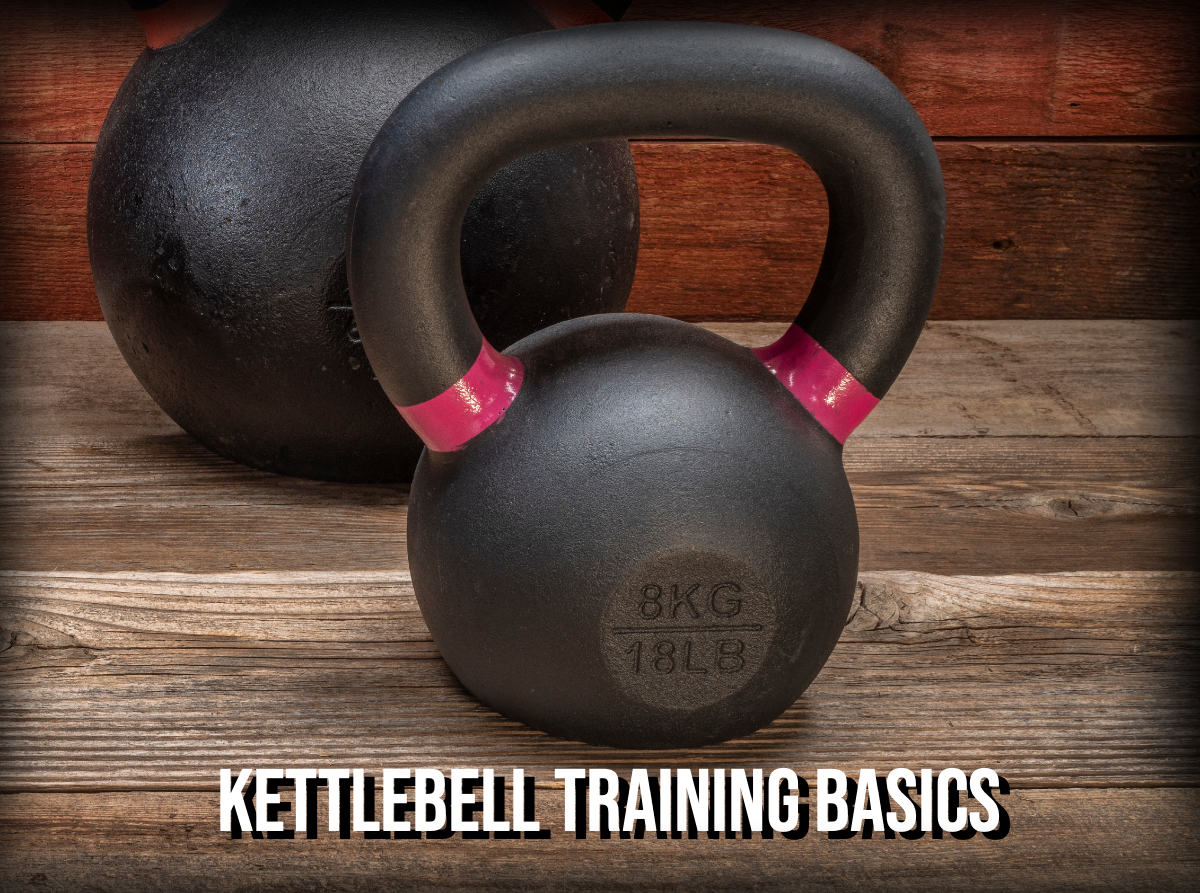
The two types of kettlebells that are common available on the market are competition style kettlebells made of steel and traditional cast iron kettlebells. These two styles have more similarities than differences. Whichever style you choose they will work for you in a similar way. The most obvious difference is that competition style kettlebells maintain the same size no matter which weight you choose. For example an 8 kgs kettlebell will be the same size as 32 kgs. It is achieved by making lighter bells hollow inside. You can see the purple competition kettlebell on the picture below and a few cast iron bells. You can see that the cast iron kettlebells differ in size.

Some other differences include the shape of the handle, the horns of competition style kettlebells are parallel to each other. The diameter of the handle differ in cast iron kettlebells, lighter bells have smaller handles. For the competition kettlebells the diameter of the handle is consistent. At our store we sell cast iron kettlebells since they are much more affordable while providing similar functionality. We also offer adjustable kettlebells, with high you can have access to different weights while having only one kettlebell.
How To Choose A Kettlebell
When choosing your kettlebell pay attention to the quality of build, design and paint. Good quality kettlebell has a smooth handle and body, which will guarantee that you can train without worrying about injuring your skin. While its not easy to tell when the kettlebell is new, low quality paint can chip creating sharp edges and cause potential risk of injury.
Now that we covered some basics about choosing the correct equipment, let’s explore some exercises to add to your strength training workout.
Kettlebell Swing
Kettlebell swing is a very popular exercise that is great for full body development. The swing involves muscles of the upper body as well as hips and glutes. Kettlebell swing also improving explosive power and cardiovascular endurance of the athlete.
At the starting position stand with your feet shoulder-width apart or slightly wider. Grasp the kettlebell handle with both hands. Your back should be straight, and your chest up. Engage your core muscles to stabilize your back.
With a firm grip on the kettlebell, initiate the movement by driving your hips back and then forcefully thrusting them forward as you stand up. This hip thrust generates the momentum for the swing.
- As you swing the kettlebell forward, keep your arms straight and let the momentum swing the kettlebell up to about chest height level. The movement should be controlled and balanced. At the top of the swing, the kettlebell should float for a moment before starting to descend.
- As the kettlebell starts to descend, hinge at your hips again and allow it to swing back between your legs. Keep your arms relaxed but maintain a strong grip on the kettlebell handle.
Continue the swinging motion with control and balance, ensuring that the power comes from your hips and glutes rather than your arms. Aim for a controlled swinging motion rather than lifting the kettlebell with your arms.
Exhale forcefully as you swing the kettlebell up (during the hip thrust). Inhale as the kettlebell swings back down between your legs.
Overhead Press
It is a great exercise that develops your shoulders. Additionally it involves your arms and core.
- At the starting position stand with your feet shoulder-width apart or slightly wider. Hold a kettlebell in one hand with a neutral grip (palm facing inward) at shoulder height. The kettlebell should be resting on the back of your forearm and not your wrist.
- Engage your core to stabilize your back. Your shoulders should be relaxed and away from your ears. Ensure your wrist is straight, not bent excessively. Press the kettlebell overhead by extending your elbow and pushing the weight straight up. As you press, your forearm should rotate so that your palm faces forward at the top of the movement. Fully extend your arm without locking your elbow completely. Your bicep should ideally be next to your ear at the top of the movement.
Once the kettlebell is overhead, pause briefly to stabilize your shoulder and engage your muscles. Ensure your wrist remains straight and your shoulder is packed. Lower the kettlebell back down to the starting position in a controlled manner. This is typically done by reversing the movement pattern, bringing the kettlebell back to shoulder height. Exhale as you press the kettlebell overhead. Inhale as you lower the kettlebell back down.
Goblet Squat
It is a great exercise for building lower body strength, particularly targeting the quadriceps, glutes, and hamstrings, while also engaging the core muscles. Here’s how to perform the kettlebell goblet squat with proper form.
- At the starting position stand with your feet slightly wider than shoulder-width apart. Hold a kettlebell with both hands by the horns (the sides of the handle) close to your chest. Your elbows should be pointing down and your palms facing inward.
- Begin by standing with your feet slightly wider than shoulder-width apart. Hold a kettlebell with both hands by the horns (the sides of the handle) close to your chest. Your elbows should be pointing down and your palms facing inward.
- Brace your core muscles to stabilize your torso. Your chest should be up, and your shoulders should be relaxed and away from your ears.
-
- Initiate the squat by pushing your hips back and bending your knees. Lower your body down until your thighs are at least parallel to the ground. It’s okay if you can go deeper, but don’t force it if it compromises your form.
- Keep your chest up and maintain a neutral spine throughout the movement. Ensure your knees track in line with your toes. They should not collapse inward.
- From the bottom of the squat position, push through your heels to drive yourself back up to the starting position. Focus on squeezing your glutes as you rise.
- Maintain tension in your core throughout the movement. Inhale as you lower yourself into the squat position. Exhale as you drive back up to the starting position.
-
- Complete the desired number of repetitions while maintaining control and proper form. Your weight should be primarily on your heels and mid-foot to maintain balance.


